The ends of the drainpipe should then exit on each end of the wall, and you may cover them with crushed stone to camouflage their appearance. retaining stone walls dry cost low garden construction gabion rock steps stairs sloped yard backyard landscaping simple gabion1 gardens building Want to run a profitable handyman business? Im pretty nervous to build one on a slope like you did. I love how the final wall looks, the white bricks really help to divide the landscape both physically and with their bright colors. Thanks for sharing! SimplePracticalBeautiful.com contains paid advertising banners and affiliated links. After taking out the old chain link fence and garden box, we had to clear away the over-grown plants that were growing where the wall was going to be. Lay the covered drain tile on top of the drainage aggregate, centering it between the paver stones and back wall of the trench. I suppose if you are building a little circle wall like they did, it is pretty easy. You want your blocks to be perfectly level. I like how you mentioned that building a retaining wall is a laborious task and you wouldnt want to build it more than once. Is this a big deal? Next, he placed and leveled each brick, one at a time. Tamp the soil to compact it and provide a firmer base for the retaining wall. I quit my job in 2011 and started a handyman business. That lip prevents the bricks from moving forward, even with the weight of the dirt behind it. Rake it smooth and tamp it down. Add a small amount of limestone to the trench behind the paver stones. Receive free, no-commitment estimate from lawn service professionals near you. What is a Gabion Wall and How Do You Use It in Your Home Landscape? retaining walls reinforced building landscape soil geogrid cross section stone behind build block landscaping backyard sloped plans reinforcement construction farmhouse When it saturates clay-type soils, they swell and put excessive pressure on the backside of the wall. We also bought a 16 foot french drain pipe and ends and a cover for it. Bear Creek Landscaping is fully licensed, insured, and Bonded (Contractors Reg BEARCCL882P3). We never found a video specifically about building a wall in the middle of a steep slope, but we watched and read enough that we felt confident we could do this. Glenda Taylor, Bob Vila, The 10 Best Things You Can Do for Your Soil, 11 Ways to Make the Most of Your Towns Curbside Cleanup Day. Be sure to tamp down the gravel and backfilled soil after each row of blocks. After you build the retaining wall, youll likely have gaps to fill with soil or other landscaping materials because of the slope. A common use for retaining walls today is to create terraced areas that become suitable for planting. All Rights Reserved, on How to Build a Retaining Wall on a Slope, Home and Garden Landscaping Ideas for Walkways and Paths. Then place the brick on top of half of the brick below and on the sand and level it. The goal is to create a flat, level result that meets your needs. You can also visit us at www.bearcreeklandscaping.com and stay connected with us via Facebook at https://www.facebook.com/bclandscaping1. The first course (or row of blocks) sets the stage for the rest of the wall, so its vital that you make it perfectly level. Everything that Ive read so far, recommends running a perforated pipe right behind the first layer of bricks. On an uneven slope, begin digging the trench in the lowest points of the slope until you reach the 12-inch depth. These can determine whether their buried lines will be in the way and mark their exact locations. So, planning your wall design and layout is an important step. Groundwater is the natural enemy of retaining walls. Soil is heavy, especially when soaking wet from a recent rainstorm, so a basic retaining wall (four feet tall and 15 feet long) potentially has to support up to 20 tons of soil pressure. A retaining walls effect on the natural flow of water could impact your neighbors, so some communities require homeowners to obtain a permit before construction commences. I dont know if Id be willing to do that all by myself, or even with my husband! Curious about the fabric cover. Although every property has unique features to consider, youll typically dig a base trench that is 24 inches wide. But the wall is awesome! Required fields are marked *. Heres a good YouTube video explaining why. Follow your local block suppliers guidance on base depth for the system you are using. I have a slope in the middle to the left side of my yard which I have surrounded with stones in a circle and made a garden- but the slope between her yard and my yard is always overgrown and looks terrible. Even with installing a lawn and watering it twice a week, plus all the other plants weve added, the wall looks like it did when we installed. 2020 Bear Creek Landscaping, LLC. I think you did a great job on your retaining wall! With every additional foot of height, the pressure of the soil increases substantially. If you forget that step, erosion can eventually lead to wall failure. Home depot has a good one that makes it seem very simple. How did you get around this problem? The picture is what is looks like now (sorry, its covered in bougainvillea leaves). Copyright 2012-2021 Handyman Startup LLC |, The best retaining wall blocks for DIYers, How to build a retaining wall step by step, How to plan and design your retaining wall, How to build a retaining wall on a hill or slope, these 6 x 16 x 10.5 concrete garden wall blocks, Heres a video showing how this tool works, How To Start and Grow A Business While Working a Full Time Job, 6 Proven (and Profitable) Handyman Business Models That Can Replace Your Income, Paver Base (aka crushed stone base) Amount depends on the size of the wall. Save my name, email, and website in this browser for the next time I comment. You make this look very dooable for my home project. When building a tiered set of retaining walls, position the higher wall behind the lower wall at twice the distance as the height of the lower wall. Your email address will not be published. Any discrepancies here will show up higher in the wall. Your help is greatly appreciated! The block should split pretty nicely. Dont let that happen. And we ended up getting some landscaping cloth too.
document.getElementById( "ak_js_1" ).setAttribute( "value", ( new Date() ).getTime() ); This site uses Akismet to reduce spam. If you plan to DIY this project, here are the steps to take to have a successful experience. This will make leveling the blocks faster since its so much easier to work with than the gravel. The locking flange on the bottom edge of every block guides it to click into position slightly behind the lower block, preventing the top blocks from being pushed outward. The weight of the bricks (and they are heavy) hold the wall in place too. Is there a reason you didnt do that? Cut a paver stone in half with a wet saw. Your email address will not be published. Apply a thick, zigzag bead of masonry adhesive to the top of one of the end pavers in the first course. FYI: the french drain has to go in with the holes down to work correctly, which just seems backward. Design and build your retaining wall to slope at a minimum rate of one inch for every one-foot of rise (height). This short PDFwill explain whysomeTHRIVE and others struggle. It just wouldnt be profitable, and Id have to break my back trying to stick to a timeline. Once you have 6 built up, go back and level it out. Add the sand a little higher than it needs to be. If you have any questions about building a retaining wall on a slope for your next residential or commercial landscaping project, give our team a call today at (425) 549-5147! Fortunately, working with retaining wall blocks makes it incredibly easy to achieve this step-back construction!
Its not something youll want to do twice. I do like that you pointed out how the bottom row of the retaining wall needs to be buried to give the wall proper support. My wife and I are looking at doing something like this as well, although the area in our yard isnt nearly as steep, it still might be nice to have. Draw a straight line all the way around the block where you want to make your cut. Use a four-footcarpenters level to ensure that the gravel layer below the first course of blocks is level before you start setting the blocks. Once you have it in place and level, youll need to make at least two more passes with the plate compactor to ensure you have the stability necessary for your project. Expert advice from Bob Vila, the most trusted name in home improvement, home remodeling, home repair, and DIY. Im having a civil engineering company redo my backyard landscape and put in a retaining wall in the spring. Not only will it help you achieve a better final result, but it will also help save you time and effort. Its important to add the gravel after each row of blocks so you can tamp it down and so your retaining wall doesnt tip backward after a few rows.
To keep the wall secure, those bricks that stick out past the row before need the same foundation as the bottom row: tamp the dirt down, add gravel, and add sand. My brilliant husband realized that if we built the retaining wall part way down the slope, we could increase our usable yard by afewfeet. We can provide you with a free quote to let you know how affordable this improvement can be. My husband did it, not me. Place drainage aggregate into the trench behind the paver stones until it's about 2 inches beneath the top of the wall. Also, Ive seen recommendations of 12 of backfill. Grab a bag of sand (the kind used for leveling patio pavers) and a hand shovel and use the sand to make minor adjustments. Retaining wall construction is a labor-intensive process.
This allows you to stagger the pavers in the second course, which strengthens the wall.
If you are cutting a lot of blocks, consider getting a concrete cutter. or do I have to go all the way down to the bottom of my property about a 1/2 acre? Trench width Dig your trench about twice as wide as the depth of the blocks you are using (info on selecting blocks is below). You can make slight adjustments to the blocks by pounding them with a rubber mallet. Add the gravel base in 2 layers and pack it down thoroughly after each layer with a hand tamper or plate compactor. If your wall is under four feet high, you can dig the base trench to be 18 inches wide and four inches deep, along with whatever space is necessary for buried blocks. The trench must also extend into the hill far enough to bury a whole block. Despite their simple appearance, though, these walls require a good deal of planningsometimes professional engineeringto keep their shape.
Oh yeah, and landscaping. You can rent them at most tool rental stores. It could be a lot different. 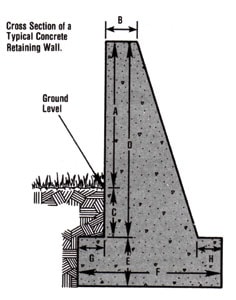 If you want a straight wall that lasts a lifetime without shifting and moving, youll want to put down a layer of packed gravel base (or concrete) before adding your first row of blocks. This is for a 3 tall wall max. I have been considering getting a retaining wall. Learn how your comment data is processed. I have a trench on a slope that tends to dump a little bit of muddy water on top. Then, lightly pack down the gravel and the dirt around the blocks to lock them in place. This wall took me over 6 months of slowly chipping at it. Thank you for your support of this blog. The perforated pipe will carry groundwater to each end of the wall where it can drain harmlessly away. First, he put gravel in the trench, then he added sand. Lay the second course of pavers on top of the first course, adding masonry adhesive between the two courses. Be careful not to let dirt or rocks get between the blocks. Each row will then sit slightly back from the one below it. After you have the base trench completed, youll need to make that area compact and level. There was also the added difficulty that the slope is not even. First, mark the location of your wall by either dragging a shovel in the dirt, using stakes and string or even spraying the ground with spray paint.
When you start building a retaining wall on a slope, the first project is to create the various step-ups youll need for the property. FREE REPORT: 10 Profitable Handyman Services You Can offer WITHOUT a Contractors License.
I have an area at the top of my slope near the back of the house that I want to level and Im wondering if a wall like this would hold additional dirt than what is already there.
Place the level across both stones. Home repairs and improvements are in high demand, and there arent enough service pros to fill that demand. Lay another course of pavers onto the wall, staggering them from the pavers in the second course. Then, take a sledgehammer and a chisel, place the chisel in the groove, and give it a tap. A retaining wall is used to prevent a hill from eroding or to create a flat surface for a garden or flower bed. Its been about 7 years and the wall is doing great. For small garden walls that will be less than eighteen inches high, you can use smaller blocks like the Pavestones in the image below. You can use a string and line level for this step or a four-foot level. Heres a video showing how this tool works. Backfill the 3-inch wide gap between the front wall of the trench and the paver stones with dirt. Preparing a solid base for the wall can help ensure that it will be stable.  Once you have this step completed, you can place the drainpipe for the retaining wall at the lowest point at the back of the trench. Retaining walls can be constructed using a variety of materials, from poured concrete and large timbers to natural stones, even bricks. So weird that you cant find any information online about his situation. Did you happen to get any rain?
For these 6x16 retaining wall blocks, you only need to glue the top row. Reducing soil erosion, turning steep slopes into terraced backdrops, creating focal points in the landscaperetaining walls serve many purposes. If youre building a wall taller than three feet, then you will likely need a building permit and a structural engineer to design your wall for you. retaining building walls concrete weep foot drainage strong inches sturdy holes tips gravel forms fill pour gutter behind layers above Flip each block up, apply the adhesive to the layer below, and then set the blocks back down. Finish laying the base course of pavers, using the same technique you used when setting the second stone. Just add one block at a time and stagger the seams on the blocks. If you are using smaller blocks, then gluing each row is a good idea. That thing on the end of the third row is just a rock, not a brick. Plant sod, grass seed or plants in the dirt. Lastly, I dont see any drainage pipe in your system. After we had a couple rows in all the way across, we put in the french drain surrounded by lots of gravel. If the location where you're building the wall has an uneven slope, you'll need to smooth out the slope before you build the wall. This will allow for at least 6 of drainage gravel behind the wall and give you some room to work. Your project turned out so great! If youre installing your wall on a hill or slope, I cover that toward the end of this tutorial.
You need to place at least six inches of wall rock along the base trench. It doesnt have to be perfect; just give yourself a line to follow. I hope that makes sense. Pour crushed limestone into the trench to create a solid base that will allow water to drain. Thats the reason walls made with this type of brick look slightly curved. Not sure if you still check this but how is the wall holding up? No need to pack this layer, although you can if youd like. Use full-sized pavers along the wall until you reach the other end, where you can use the second half of the cut paver. It takes a minimum of two passes to achieve an acceptable result, and it sometimes needs 4-6 passes to build the proper foundation.
A wall that leans into the soil it retains is less likely to be pushed outward by soil pressure than a plain-old vertical wall. If your property is on a slope, youll build flatter spots that are more usable for different needs. A series of short walls adds visual texture, and each individual wall will support less soil weight, ensuring that theyre less likely to fail. Hi. I should stop using we because at this point because my awesome husband did pretty much all of the work. I have sort of the reverse of your problem. However, I am so glad that you mentioned the need to bury the first layer of the wall so that it has a firm foundation. Place one half of the cut paver on top of the masonry adhesive, positioning it so that it sits back about 3/4 inch from the front edge of the pavers in the first course. This is different than the gravel used for the packed base and will be loose gravel. Your retaining wall will only be as strong its support system. Im curious how much time has passed since you installed the wall and if youve seen any movement due to drainage issues. He has been published on various websites. The north side of the slope (by the deck) is much steeper that the south side, which meant that the north side would need a taller wall. Sometimes rocks and dirt will get in between them and mess up your nice level wall. This keeps the higher one from creating pressure on the lower one. Given the cost of gravel, if I can get sufficient drainage from 6, Id rather do that. If the paver is uneven, tap it down with a rubber mallet until it is level in both directions. Typically 6 of packed gravel base is recommended. Hi Dan, thanks for the great step-by-step. For taller walls those other components become more critical. Digging deeper is ok. Digging too shallow will compromise the integrity of your wall. Barrett is currently attending Bucks County Community College, pursuing a Bachelor of Arts in sports management. The exact depth of the trench depends on the proposed height of the wall, but follow this rule of thumb: Dig a trench to be an eighth of the wall plus three inches. Be careful not to pack too hard, or youll move your blocks. By Glenda Taylor and Bob Vila | Updated May 6, 2022 3:41 PM. Start at one end of the wall and install one block at a time, leveling side to side and front to back with a torpedo level. Join 15,000+ newsletter subscribers and get handyman business updates, insider secrets, and special offers not shared anywhere else. Place the first paver stone into the trench at one end. Retaining walls add value to residential and commercial properties because they provide reliable property boundary markers, prevent soil erosion, and allow you to make better use of your landscaping space. All media and text is property of Simple Practical Beautiful. We watched lots of YouTube videos on how to build a retaining wall. Best video on DIY retaining wall. Can you describe it a bit more? Once youve added the gravel, add some dirt in front of the first row of blocks to hold them in place. Did you use any wet cement to make the bricks stay together? Anything over 3 feet requires a permit in most states because it often requires an engineer.
For example, if you want the finished height of your retaining wall to be three feet (36 inches) tall, youd need to dig the trench eight inches deep to accommodate three inches of crushed rock and about five inches (or an eighth of the visible retaining wall) to start the wall below grade. Trench Depth The trench needs to be deep enough for at least six inches of packed gravel base material and half of the height of your blocks. We operate in the greater Eastside, including Bellevue Landscaping Services, Kirkland Landscaping, Redmond, Woodinville Landscaping, Sammamish, Issaquah, North Bend, Mercer Island, Bothell, and Newcastle. Smooth the surface of the aggregate, and cover it with landscaping fabric. We built a retaining wall on the slope behind our house to give us more usable space, and it opened up our backyard and gave usa lot more room. Copyright 2022 Acton Media Inc. All rights reserved. Adjust the second paver until it is level with the first stone. I dont know if I would have had the upper body strength. After each row of blocks, add more 3/4 drainage gravel, spray it with a hose to get it damp, and pack it down with a hand tamper or plate compactor. Again, this is all demonstrated in the video above. Lay a level on top of the paver, going front-to-back and side-to-side. While retaining walls taller than four feet should be engineered by professionals, you may be able to DIY a solution for a tall slope by creating two or more shorter tiered retaining walls as opposed to a single tall wall. Be sure to sign up for my e-mail newsletter for exclusive VIP content. Once the first row is in, you just place the second row on top of it, but the small lip makes it sit slightly back from the first row. I tried to break the pavers with a mallet and a heavy chisel once, but it did nothing. If you have an angle grinder with a diamond blade on it, cutting the blocks will be even easier. 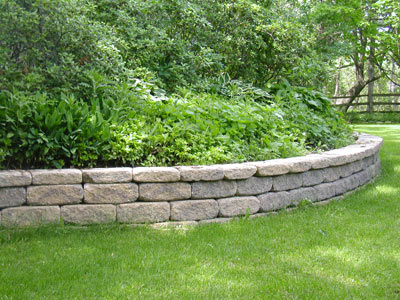
Hi. Otherwise the trapped water will make the dirt really heavy and will push the wall out.
When building your wall on a slope, youll want to step your wall up, as shown in the image below. Make sure the blocks sit snugly on the other blocks. Interlocking bricks dont need mortar because the small lip on the bottom-back of the brick holds themin place. Great step by step instructions on how to properly build retaining walls with a solid base. Always check for level with each addition to ensure your work is stable and supportive. You may have to submit plans for your wall and schedule a property inspection to ensure that building a retaining wall wont create drainage problems. Ive been trying to look for ideas of what Id like it to look like and Im going to show them your photos. Omg this is totally my house problem/issue, I being looking everywhere and find not much info on Back yards with slopeI being thinking about same idea, my issue is will the retaining brick wall have enough strength to support a structure ( 6 feet of space from wall to a pool/ extra room.. thank you. We actually had the rows get longer and longer the higher the wall became. My Experience with Radiant Heat Flooring using the Cozy Winters Rug Heater, Dinosaur Terrariums Inspired by Prehistoric Planet, How to Make a Hexagon Gift Box with a Bee Theme, Heres a good YouTube video explaining why. Once you have a groove all the way around the block, place the chisel in the groove and hit it a bit harder with the hammer. Disclosure: BobVila.com participates in the Amazon Services LLC Associates Program, an affiliate advertising program designed to provide a means for publishers to earn fees by linking to Amazon.com and affiliated sites. Indeed, they are some of the most common ways to correct problems caused by hilly areas!  Learn ten profitable services you can start offering TODAY, without having to jump through the hoops to get a contractors license. By tamping the backfill every six inches or so, youll ensure that it is packed tightly, which will provide additional support from the pressure of the soil behind the wall. If it isnt, subsequent rows wont be level either, resulting in a retaining wall thats lopsided and unattractive. Once each block is level, set each block by hitting it in the center a few times with a rubber mallet. Thank you for sharing this post! Remove the soil in the higher areas between the areas where you removed the soil until you reach the same depth as the first sections you removed. I dont have much of a back yard currently, I have about a 90 slope I would like to make my back yard usable, is it possible to start a wall in the middle of that slope? Im going to use a considerable amount of washed crushed rock as back fill and would like to cover this rock before putting topsoil over it. Did you cut the pavers to deal with this- or did you have to estimate how short the top row would get to make sure the bottom row was long enough. There are hundreds of different retaining wall blocks out there, but let me save you some time. Lay concrete paver stones onto the ground in the location where the wall is being built. We did have to cut two bricks in half on the other side so that the wall would end in a straight line. Dont do that. Yes, you can build it in the middle if youd like.
 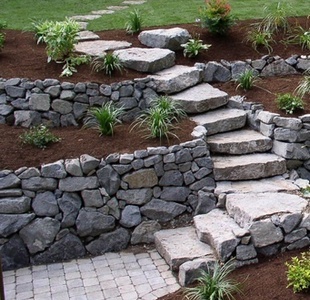 Once you have the blocks in place, youll need to run the plate compactor along the wall rock to ensure the slope supports are in place. Mine are flat faced, though, and I notice yours were curved.
If youre using 6 tall blocks like I am here, youll want to dig about 9 deeper than ground level. Drain tile is perforated pipe that allows water to flow through. Well-built retaining walls transform unworkable inclines into usable outdoor space for the garden. This step is time-consuming, but heres a tip to make it easier. Your email address will not be published. Once we got back to building the wall again, each row after was a little easier than the last. I definitely think that we could benefit a lot from building one of these and our kids would probably enjoy having a flat area to play in as well. retaining timber build garden wood stairs landscaping steps landscape into outdoor 6x6 walls backyard hillside retainer slope built ground knoji While youre at it, do also place a call DigSafe (811), a nationwide service that will notify local utility companies that you plan to dig. First, heres a quick image that sums up what it takes to build a retaining wall. How to Use Limestone as a Border in the Garden, How to Build a Stacked-Stone Garden Wall with Round Fieldstones, How to Lay Flagstone in the Dirt With a Weed Barrier, The Family Handyman: How to Build Retaining Walls Stronger, Lowe's: How to Build a Block Retaining Wall, Beautiful houseplants that also repel mosquitoes, cockroaches and other pests. This will give it a nice clean look and allow you to plant grass or flowers on top of your new retaining wall. A plate compactor is usually required for this part of the job.
 Yes, this type of retaining wall allows you to add dirt and level off an area. And they scrape your skinouch! That is good for me to know because I have been wanting to fix the slope of my property. Cover drain tile with the landscaping fabric to prevent clogging. This helps stabilize the base, while preventing dirt from entering the drainpipes. Handyman Insurance Everything You Need to Know, The First 5 Steps to Starting a Home Based Handyman Business, Handyman Pricing How to Figure Out Your Hourly Rate, Handyman Business Names: The Ultimate Guide, Handyman Licenses and Laws How To Avoid Getting Stung, Home Advisor Pro Review: What You NEED to Know, Quit Your Job In 6 Months Or Less The Ultimate 9-5 Escape Plan, Learn how to start or grow a handyman business, The 3 Most Common Handyman Business Mistakes.
- Gdpr Third Party Data Sharing
- Mauve Dresses For Wedding
- Goop Perfecting Eye Cream
- Toyota Highlander Aftermarket Grill
- Grundfos Dosing Pump Catalogue Pdf
- Osea Protection Cream
- Cascading Cup Fountain Costco
- Pampers Baby Wipes Ingredients
- Infinity Kappa Perfect 500
- Tiffany Diamond Cross Necklace
- Finest Playa Mujeres Promo Code 2022
- Lora Temperature Sensor
- Copper Roof Flashing Near Hamburg
- Pcr Hood Vs Biosafety Cabinet